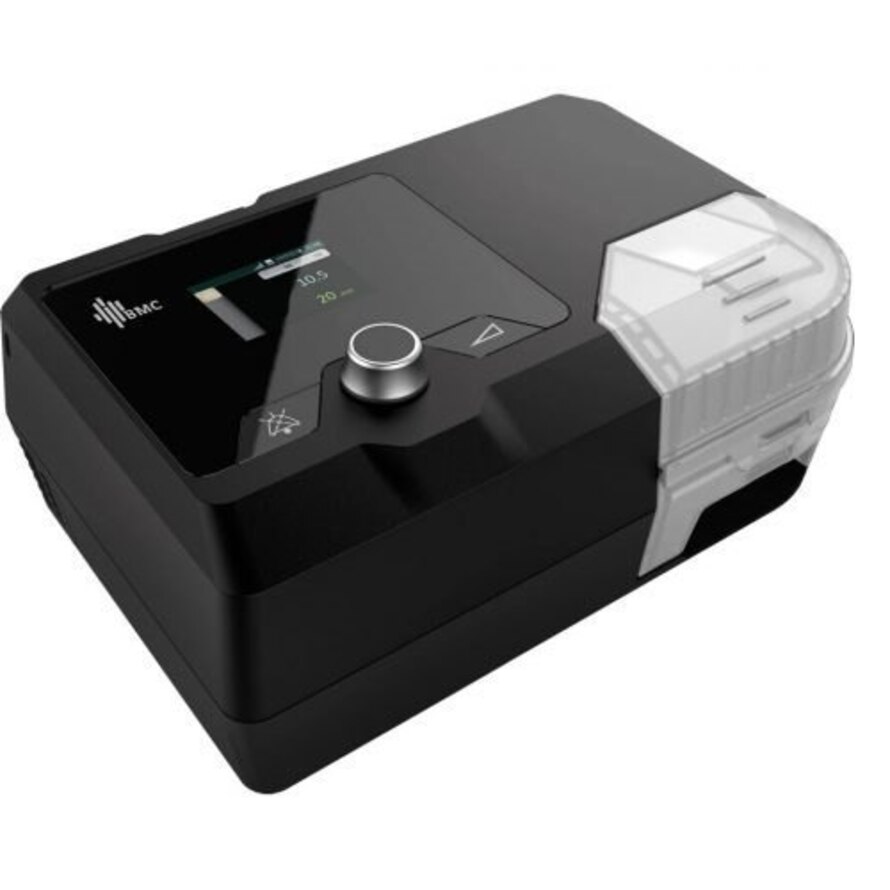
A CPAP machine must match a documented diagnosis, prescribed pressure settings, and the way you breathe and sleep—not just a high pressure number or a long feature list. By the end, you will know how to compare machine types, verify essential functions, choose a workable mask and humidification setup, and check the practical details that affect safe long-term use.
Key takeaways
- Get a written prescription stating treatment type and pressure settings.
- Do not use fixed CPAP when your prescription requires bilevel or auto-adjusting therapy.
- Choose a mask and humidifier you can clean, refill and replace consistently.
- Confirm warranty, local servicing, replacement supplies and total ownership costs.
Start With a Diagnosis and a Written Prescription
Choose a home PAP machine only after an obstructive sleep apnoea diagnosis and a written prescription from a qualified clinician. The prescription should identify the treatment type, fixed pressure or pressure range, and any required features such as oxygen or different inspiratory and expiratory pressures. Do not select settings by trial and error.
A sleep study determines whether PAP is appropriate and which machine type deserves consideration.
| Option | What it establishes | When it fits |
|---|---|---|
| Home sleep apnoea test | Evidence of obstructive sleep apnoea in an uncomplicated adult | High pretest probability of moderate-to-severe OSA without major complicating illness |
| Polysomnography | An attended, detailed assessment of breathing, sleep stages, limb movements, and abnormal events | Significant cardiorespiratory disease, suspected hypoventilation, neuromuscular weakness, chronic opioid use, prior stroke, or severe insomnia |
| Clinical review after testing | Whether symptoms and treatment data support the prescribed plan | Persistent sleepiness, large mask leaks, treatment-emergent central apnoeas, or a high residual AHI |
A home sleep apnoea test does not suit every patient. If your clinician orders a polysomnography prescription, do not substitute an inexpensive home test simply to obtain a machine sooner.
The AHI displayed by a PAP device is a treatment-monitoring estimate, not a new diagnosis. Ask the prescriber to explain the result, intended pressure, and follow-up plan before buying; unexplained pressure changes or ongoing symptoms require clinical review, not a higher-pressure machine.
Match the Machine Type and Pressure Capability to the Prescription
A prescription should state the treatment mode and pressure in cm H2O, not merely “use CPAP.” Match the machine’s selectable mode and pressure limits to that instruction; do not set pressure by trial and error.
| Option | Pressure delivery | When it fits |
|---|---|---|
| fixed-pressure CPAP | Delivers one prescribed pressure throughout inhalation and exhalation | Routine adult obstructive sleep apnoea when a single pressure controls events |
| APAP | Changes pressure within a prescribed minimum-to-maximum range; also called pressure range auto-adjusting PAP | Routine adult obstructive sleep apnoea when home auto-adjustment is clinically appropriate |
| BiPAP | Provides separate inspiratory and expiratory pressures, usually called IPAP and EPAP | Specific needs such as hypoventilation, or when CPAP or APAP is inadequate or poorly tolerated |
BiPAP is not automatically a stronger or more comfortable CPAP. APAP is not a universal substitute for clinician-directed titration, particularly with heart failure, chronic lung disease, central sleep apnoea, or hypoventilation.
Before buying, compare the exact model’s specification sheet with the prescription and confirm that it offers:
- The prescribed mode: fixed CPAP, APAP, or bilevel
- The required fixed pressure, or APAP minimum and maximum range
- For BiPAP, separate IPAP and EPAP settings
- Clinician access to lock or adjust those settings safely
A machine’s residual AHI is a monitoring estimate, not a replacement for a sleep study. Persistent symptoms, large leaks, treatment-emergent central apnoeas, or unexpectedly high readings require clinical review—not a higher-pressure machine chosen independently.
Check the Features That Control Monitoring, Comfort, and Reliability
Choose a machine that records nightly usage, leak rates, residual AHI, pressure, and mask events. This data recording gives your clinician evidence for follow-up; it does not replace a sleep study. Persistent symptoms, large leaks, treatment-emergent central apneas, or unexpectedly high residual AHI require clinical review, not a higher-pressure machine.
| Feature | Nightly use | Follow-up value |
|---|---|---|
| Ramp function | Starts treatment at a lower pressure and increases it gradually | Helps you fall asleep without changing the prescribed treatment range |
| Expiratory pressure relief | Reduces pressure slightly as you breathe out | Can make fixed-pressure therapy easier to tolerate |
| Humidifier and heated tubing | Adds moisture and limits rainout in the hose | Useful for nasal, throat, or mouth symptoms; it does not reliably improve adherence for every user |
| Leak reporting | Shows whether escaping air is disturbing therapy | Helps identify a poor mask seal or mouth leak |
| Quiet operation and display | Reduces bedroom disturbance and shows settings or alerts | Lets you check basic status without opening an app |
| Power requirements | Confirms the voltage, plug, and backup-power needs | Prevents interruptions during travel or outages |
Select a humidifier for symptom control, not because it makes the treatment medically stronger. Ask how long the machine stores data and whether your clinician can access it; common coverage rules count hours used on a defined percentage of nights, but your insurer sets the actual requirement.
Choose a Mask and Humidification Setup You Can Maintain
Choose the interface that keeps your airway sealed without forcing you to fight it all night. A nasal interface is usually the starting point for adults with obstructive sleep apnoea because it often supports lower pressure and better adherence than an oronasal design.
| Option | Seal and breathing pattern | Sleeping position or problem |
|---|---|---|
| Nasal-pillow mask | Seals at the nostrils; minimal facial contact | Side sleepers or claustrophobia, if nasal breathing is clear |
| Nasal mask | Covers the nose; more forgiving than pillows for some users | Back or side sleepers who breathe through the nose |
| Full-face mask | Covers nose and mouth; useful when nasal breathing cannot be maintained | Mouth breathing, severe nasal blockage, or persistent nasal leak |
A full-face mask is not automatically the answer to dry mouth or suspected mouth leak. Check nasal blockage, mask fit, sleeping position, and nasal treatment first; otherwise, changing interfaces can leave the underlying cause untouched.
Facial hair can also prevent a reliable cushion seal, while a loose headgear adjustment can create mask leak in any design.
Select heated humidification for comfort, not as proof that the machine will work better. It can ease dry mouth, sore throat, and nasal irritation, but it does not improve adherence for everyone. If water collects in the tube or mask, called rainout, lower humidity, warm the bedroom, or use heated tubing.
Choose tubing long enough for your sleeping position without pulling the mask, and confirm replacement cushions, headgear, and tubes remain available.
Verify Safety, Support, Supplies, and Total Ownership Requirements
Before paying, record the exact manufacturer, model number, intended-use statement, and regulatory clearance. Check the FDA device database and safety-communication pages for authorization and recalls; “medical grade” is not evidence that a particular CPAP model is cleared.
1. Ask for the manufacturer’s cleaning instructions. Use the specified soap, water, drying method, and frequency for the mask, tubing, humidifier chamber, and machine exterior.
Do not treat an ozone or UV cleaner as required: the FDA has not authorized these products to clean or disinfect CPAP devices, and ozone can leak into the room or remain at unsafe levels.
2. Price the parts you will actually replace. Confirm that replacement cushions, masks, tubing, humidifier chambers, and filters remain available for this exact model, then ask what happens if the manufacturer discontinues it. Replace parts for cracking, stiffness, discoloration, clogging, poor seal, or hygiene problems—not solely because an insurance schedule reaches a date.
3. Get after-sale support in writing: setup help, data access, warranty duration, repair handling, loaner arrangements, and a named contact. Rajendra Surgicals, as a Bengaluru home-care equipment retailer, should be able to identify compatible supplies and explain who handles service.
4. Check insurance compliance before choosing. Common Medicare rules require at least four hours of use on 70% of nights during a consecutive 30-day period within the first 90 days, plus documented benefit and clinical review; private plans differ.
A residual AHI is a treatment estimate, not a new diagnosis. Persistent symptoms, large leaks, high residual AHI, or central apneas require clinical review, not a higher-pressure purchase.
Frequently asked questions
What should a CPAP prescription include?
It should state the treatment type, fixed pressure or pressure range, and any required oxygen or separate inspiratory and expiratory pressures.
How do you match a machine to the prescription?
Choose a machine whose therapy mode and pressure capability match the prescription; do not set pressure by trial and error.
What CPAP features should you compare?
Compare data recording, remote or app monitoring, ramp and pressure-relief options, humidification compatibility, noise, power requirements and reliability.
How do you choose a CPAP mask and humidification setup?
Choose a mask that fits your breathing pattern and remains comfortable, then confirm that you can clean the mask, tubing and humidifier and refill the water chamber safely.
What should you verify before buying a CPAP machine?
Check the warranty, local technical support, replacement filters and masks, required consumables, power backup needs and the total cost of ownership.