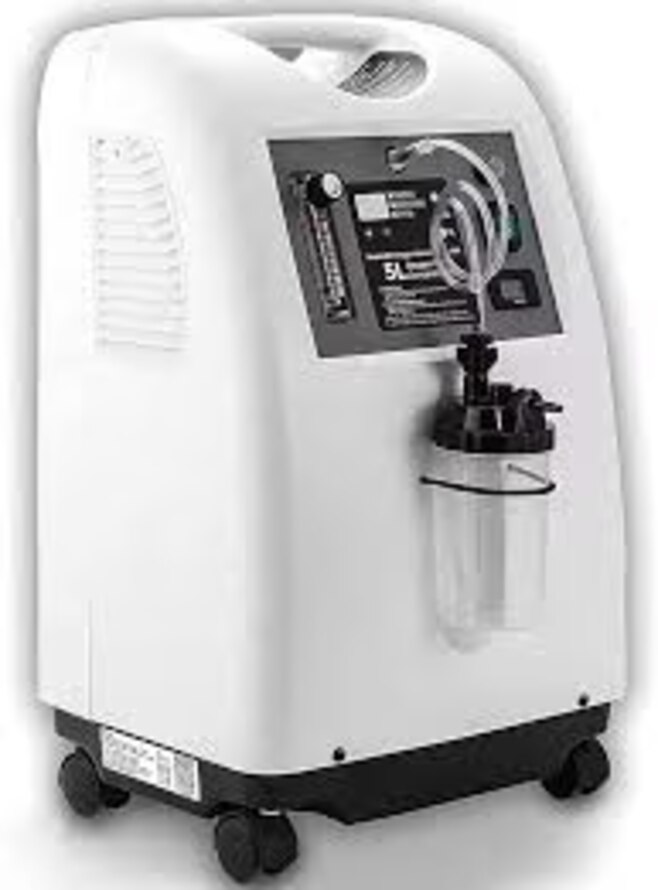
The correct concentrator is the one that delivers the prescribed oxygen mode and flow under the conditions in which the patient needs it, with a workable plan for outages, maintenance, and emergencies. By the end, you will be able to compare device specifications, reject unsuitable portable models, and plan a safer home setup.
Key takeaways
- Confirm the prescribed flow, delivery mode, and times oxygen is needed.
- Choose cylinders or liquid oxygen when concentrator limits do not fit.
- Compare oxygen output at your prescribed setting, not maximum flow alone.
- Check power, altitude, heat, battery duration, alarms, and backup supply.
Start With the Oxygen Prescription, Not the Machine
Confirm a home oxygen therapy prescription before comparing machines. The clinician must document why oxygen is needed, the delivery mode, the prescribed flow or device setting, and when it is required: at rest, during exertion, during sleep, or continuously.
A target saturation alone does not identify a usable prescription, and a consumer’s isolated pulse-oximeter reading cannot establish long-term oxygen need.
Ask the clinician to confirm:
- The litres per minute oxygen prescription for continuous flow, or the exact setting for pulse-dose oxygen.
- Whether oxygen is needed while resting, walking, sleeping, or all day and night.
- The target oxygen saturation and how it was measured, alongside the diagnosis and formal assessment.
- Whether the patient can trigger the selected device during shallow breathing, mouth breathing, sleep, and exertion.
- An alternative oxygen source and changeover procedure for a power outage.
| Delivery mode | What the clinician must verify | Selection consequence |
|---|---|---|
| Continuous flow | The required litres per minute at rest, exertion, and sleep | Reject a unit whose maximum continuous flow is below the prescription |
| Pulse-dose oxygen | Trigger reliability and bolus delivery with the actual device | Do not treat a pulse setting as equivalent to the same litres-per-minute continuous-flow setting |
| Portable concentrator | Performance during the patient’s real use conditions | Reject it if testing shows missed breaths or inadequate oxygen delivery |
A patient who needs oxygen while walking may fail on a device tested only while sitting quietly. A clinician or oxygen supplier should test the chosen concentrator under the conditions in which the patient will use it.
Choose Between a Concentrator, Cylinder, and Liquid Oxygen System
Mobility, electricity, and interruption risk determine the best source. A concentrator supplies oxygen only while powered; it stores none. Match a portable oxygen concentrator to the prescribed delivery mode and flow, because many units provide pulse-dose oxygen rather than continuous flow and may not support high-flow therapy.
| Option | Mobility | Outage and storage considerations | Best fit |
|---|---|---|---|
| Oxygen concentrator | A stationary model suits home use; a portable oxygen concentrator supports travel when its battery lasts for the planned trip. | Needs electricity and a realistic power outage backup. It occupies little storage space but stops supplying oxygen during a prolonged outage unless paired with a charged battery, cylinder, or second system. | Patients with reliable power and prescriptions within the unit’s tested output. |
| Oxygen cylinder | Small cylinders can support short trips; larger cylinders are heavy and require secure handling. | Stores oxygen without electricity, but the supply is finite. You need safe storage, regular refills, and enough cylinders for the expected outage duration. | Homes with outage risk or patients needing a dependable emergency reserve. |
| Liquid oxygen system | A portable vessel can provide more mobility than a large cylinder. | Holds substantial oxygen without mains power, but needs a larger reservoir, regular deliveries, and supplier support. | Higher-use patients needing extended, uninterrupted oxygen and able to accommodate storage space. |
For high-flow or continuous oxygen, a stationary concentrator, compressed-gas system, or liquid oxygen system can be more practical than a small portable unit. Ask the clinician or oxygen supplier to document the changeover procedure before home use begins. Never increase oxygen to treat unexplained breathlessness without clinical guidance.
Compare Concentrator Specifications at the Prescribed Setting
Verify the machine at the prescribed flow, delivery mode, and use condition—not at its maximum advertised setting. Ask for the oxygen concentration percentage measured at that flow, then have a trained technician check the outlet with an oxygen analyser while filters, tubing, and the intended cannula are fitted.
| Specification | What to verify | What failure means |
|---|---|---|
| Delivery mode | Continuous flow or pulse-dose, matching the prescription | A pulse-dose unit cannot replace continuous flow because both settings show the same number |
| Flow capacity | Delivered litres per minute at the required setting, not only the maximum | A 5 L/min oxygen concentrator rated at its limit can lose concentration under load; a 10 L/min oxygen concentrator may suit high-flow needs better |
| Oxygen concentration percentage | Manufacturer’s stated range at the selected flow, plus low-concentration alarm threshold | A nominal flow figure does not prove adequate oxygen delivery |
| Operating conditions | Altitude range, temperature range, filter condition, power draw, and noise level in decibels | Blocked filters, unsuitable altitude, or sleep-disrupting noise can reduce safe use |
Test the actual device while the patient sits, walks, and sleeps if those are prescribed conditions. Check breathing-trigger reliability during shallow breathing, mouth breathing, and sleep; a poorly positioned cannula can stop a pulse-dose unit from delivering a bolus.
At Rajendra Surgicals, ask to compare the unit’s test reading and alarm operation at your prescribed setting, then calculate battery duration at that setting rather than the manufacturer’s lowest-setting figure. Keep a backup oxygen source for power interruptions.
Related product
 | oxygen concentrator Oxygen Concentrator An Oxygen Concentrator is a medical device designed to provide a continuous supply of purified oxygen to patients who have... View product → |
Account for Altitude, Heat, Power, and Battery Limits
Altitude, heat, and unstable electricity can turn a nominally suitable unit into an unreliable oxygen source. An altitude oxygen concentrator should be checked against the manufacturer’s maximum operating elevation: thinner air can reduce oxygen concentration and trigger alarms.
Keep the air inlet and exhaust clear and stay within the stated temperature range, because overheating can reduce output or stop the unit.
| Condition | Possible effect | What to verify |
|---|---|---|
| Altitude | Lower oxygen concentration or an alarm | Maximum operating elevation and concentration at that elevation |
| High heat | Overheating, reduced output, or shutdown | Operating temperature range and ventilation clearance |
| Voltage fluctuations | Alarms, shutdown, or component damage | Required voltage, acceptable voltage range, and supplier-approved protection |
| Power outage | Oxygen delivery stops | Backup cylinder, second system, or battery plan for the prescribed flow |
| High prescribed flow | Greater power consumption and shorter battery life | Continuous-flow capacity and runtime at the actual setting |
A battery figure measured at the lowest setting does not predict battery life at your prescribed setting. Ask for runtime using the intended flow, delivery mode, and breathing pattern; confirm whether the battery recharges while the unit operates from your vehicle or backup power source.
High-flow users may need a stationary concentrator, cylinder, or liquid-oxygen system instead. Reject a portable unit if it provides pulse dose when continuous flow is prescribed, or if its tested output falls below the prescription.
Set Up and Use the Equipment Without Creating New Risks
Place the concentrator on a hard, dry surface with clear space around its air intake and exhaust. Keep it away from curtains, bedding, heaters, smoking, vaping, candles, gas stoves, sparks, and oils or grease. Oxygen accelerates combustion, including when oxygen is flowing through an unused nasal cannula.
- Confirm the prescribed flow mode and setting before switching on; do not change litres per minute or pulse-dose settings yourself.
- Connect only the supplied tubing and nasal cannula. A pulse-dose unit may fail to trigger during shallow breathing, mouth breathing, sleep, or poor cannula placement.
- Add a humidifier bottle only when prescribed and confirmed compatible. Use the specified bottle and water, never an improvised connection or assumed-safe tap water; spills and contamination can obstruct delivery.
- Wash or replace the cannula, tubing, humidifier bottle, and intake filter on the schedule in the device instructions. Keep ventilation openings clear.
- Check the person’s prescribed oxygen saturation target, breathing, colour, and alertness. Treat an oxygen-concentration, overheating, obstruction, or other fault alarm as a stop signal: switch to the planned backup and contact the supplier rather than bypassing it.
Oxygen corrects low blood oxygen; it does not open an obstructed airway or provide ventilatory support. Do not increase oxygen to self-treat unexplained breathlessness, sleep-apnoea symptoms, or nocturnal breathing problems, especially if carbon-dioxide retention is possible.
Call emergency services for oxygen emergency symptoms: severe or rapidly worsening breathlessness, chest pain, blue lips, confusion, fainting, or inability to speak normally. A concentrator is not a substitute for emergency assessment.
Frequently asked questions
What information must a clinician include in a home oxygen prescription?
The prescription should state why oxygen is needed, the delivery mode, the flow or device setting, and whether oxygen is required at rest, during exertion, during sleep, or continuously.
Should you choose a concentrator, cylinder, or liquid oxygen system?
Choose based on the prescribed oxygen demand, portability, duration of use, access to electricity, refill or delivery needs, and the limits of each system.
Which oxygen concentrator specifications should you compare?
Compare oxygen output at your prescribed setting, oxygen concentration, continuous-flow or pulse-dose delivery, alarm functions, noise, weight, power use, and battery performance.
What operating conditions can affect an oxygen concentrator?
Altitude, heat, unstable electricity, and battery limits can reduce reliability or shorten operating time, so check the manufacturer’s stated ranges and arrange backup oxygen.
How can you set up home oxygen equipment safely?
Place the unit in a ventilated area, keep tubing clear of walkways, keep oxygen away from flames and smoking, follow the prescribed setting, and test alarms and backup supplies.