The right wheelchair depends on how the user moves, sits, transfers, propels the chair, and navigates the home—not on a general size label or the lowest price. By the end, you will have a practical way to select the chair type, record the measurements, check safety features, and test whether it works in daily life.
Key takeaways
- Assess posture, transfers, fatigue, skin condition, and who will propel the chair.
- Measure seat width, doorways, turning space, vehicle storage, and ramp access.
- Choose manual, transport, reclining, self-propelled, or electric support based on daily use.
- Check battery safety, charging needs, service support, and replacement parts before buying.
Start with the User, Not the Wheelchair Category
The right wheelchair depends on how the person moves, sits, transfers, and receives help—not on the chair’s advertised weight or price. Begin with a wheelchair assessment covering elderly mobility needs, posture, trunk balance, arm strength, fatigue, pain, cognition, skin condition, home layout, transport, and who will propel the chair.
Before choosing, check:
- Can the user push both wheels, steer, stop, and brake without shoulder pain or dangerous fatigue?
- Can they sit upright and transfer safely, or do they need trunk support and an attendant?
- Can they perform effective weight shifts? If not, plan pressure management, regular repositioning, and skin checks; persistent redness needs clinical assessment.
- Will the chair pass through the home, bathroom, lift, ramp, and vehicle boot?
| Option | Matches the user | Main limitation |
|---|---|---|
| Transport wheelchair | A user who is pushed by a caregiver for outings or appointments | Small rear wheels prevent practical self-propulsion |
| Self-propelled manual wheelchair | A user with adequate arm function, coordination, endurance, judgment, and braking ability | Pain, weakness, cardiopulmonary limits, or poor balance can make propulsion unsafe |
| Recliner wheelchair | A user needing supported posture, pressure relief, leg elevation, or rest during longer sitting | Reclining changes balance and requires clearance behind the chair |
| Electric wheelchair | A user unable to propel a manual wheelchair who can operate a joystick safely | Check turning radius, seat height, charging access, ramps, pressure management, and vehicle transport |
A conventional manual wheelchair suits independent propulsion; choose attendant propulsion or electric mobility when strength, fatigue, or safety prevents it. A transport chair is not a lighter self-propelled alternative.
Choose Between Manual, Transport, Recliner, and Self-Propelled Chairs
The practical choice is who will move the chair and how much positioning support the user needs: a caregiver, the user’s own arms, or the chair’s backrest.
| Option | Practical difference | Best suited to |
|---|---|---|
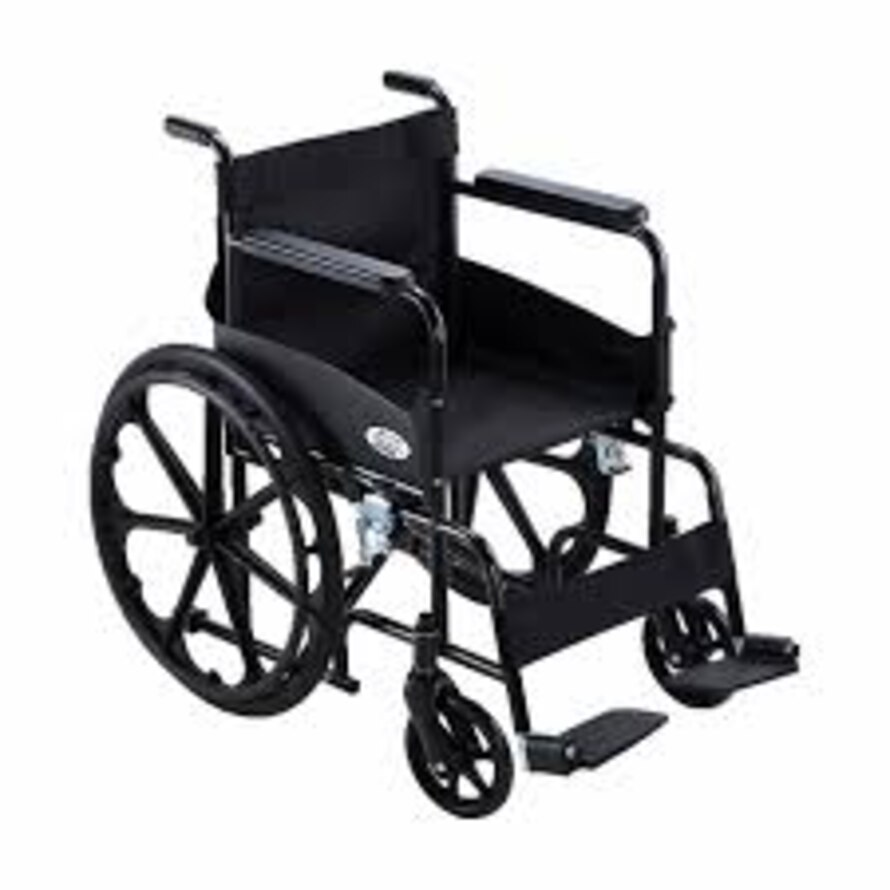
| Manual wheelchair | General-purpose chair, propelled by an attendant or by the user if fitted with large rear wheels and handrims | Users who need mobility support and have enough strength, coordination, balance, and endurance for the chosen method |
| Self-propelled wheelchair | Large rear wheels let the user grip handrims and move independently; they also add width and require shoulder effort | Users with reliable arm function, safe braking ability, and enough energy for repeated propulsion |
| Transport chair | Small rear wheels and push handles make it attendant-propelled; the user cannot normally drive it with the rear wheels | Users who need short trips, appointments, or vehicle transfers with a caregiver pushing |
| Transit wheelchair | A compact attendant-propelled design, often easier to store and lift than a full-size manual chair | Users who do not propel themselves and need occasional, supervised movement |
| Recliner wheelchair | The backrest reclines to change trunk and hip position; it is heavier and needs more space behind the chair | Users needing supported posture changes, rest, or pressure-management positioning under clinical guidance |
Do not choose from a product label alone. A person with shoulder pain, weak grip, poor judgment, severe fatigue, or limited trunk control may be unsafe in a self-propelled wheelchair. A recliner wheelchair also does not replace a seating assessment: excessive recline can cause sliding, shear, or poor breathing position.
Check whether the seat belt is a positioning belt or a tested vehicle restraint. For occupied vehicle travel, use a wheelchair and tie-down system designed for that purpose, or transfer to a vehicle seat when feasible.
Measure the User, Home, and Vehicle Before Buying
Measure the user in their usual sitting posture, then measure every route the wheelchair must take. The wheelchair seat width should support the hips and clothing without side-to-side sliding; excessive width weakens posture control, while a narrow seat creates hip pressure. Seat depth should support the thighs while leaving clearance behind the knees.
Check seat-to-floor height against foot contact, transfers, and table or bed height.
Record these measurements before comparing wheelchair dimensions:
- User’s hip width, thigh length, lower-leg length, back height, and footrest length.
- Doorways, corridors, bathroom entrances, and lift doors at their narrowest points.
- Turning areas beside the toilet, bed, and sink; doorway width alone does not prove safe bathroom access.
- Vehicle boot opening height and width, loading lip height, available floor length, and the chair’s folded or dismantled size.
| Route or feature | Measure | Problem prevented |
|---|---|---|
| Main entrance and internal doors | Clear opening with the door fully open | A frame may fit while hand rims or armrests catch |
| Bathroom | Door width plus turning space beside fixtures | Entry without a safe transfer or exit |
| Lift | Door opening, cabin depth, and diagonal length | A chair fits the doors but not the cabin |
| Storage | Folded height, width, and weight | An awkward chair remains unused |
| Vehicle | Boot opening, loading height, and tie-down points | Lifting damage or unsafe positioning |
Include clothing, bags, cushions, and oxygen equipment in the weight-capacity calculation. A seat belt is not automatically a crash restraint; use a wheelchair and tie-down system tested for occupied transport, such as under applicable RESNA standards, or transfer to a vehicle seat when feasible.
Compare the Features That Change Daily Handling and Comfort
The heaviest removable component, not the listed chair weight, determines whether loading is manageable. A folding wheelchair can still be hard to lift if the wheelchair wheels, footrests, armrests, or battery must come off first; check each part separately.
| Feature | Daily effect | What to check |
|---|---|---|
| Wheelchair wheels and tyres | Large rear wheels help self-propulsion; pneumatic tyres absorb bumps but need inflation. Solid tyres need less maintenance. | Match wheel size and tyre type to strength, terrain, and storage. |
| Castors | Larger castors roll over thresholds and uneven ground more easily. Small castors turn tightly but catch on obstacles. | Test the actual floors, ramps, and door thresholds. |
| Brakes | Wheel locks hold the chair during transfers but do not replace caregiver control on slopes. | Ensure you can reach and operate both brakes. |
| Footrests and elevating leg rests | Footrests support the lower legs and prevent sliding; swing-away or removable versions simplify transfers. Elevating leg rests add weight and suit specific clinical needs. | Set foot height so feet do not drag and thighs are not pushed upward. |
| Cushion | A wheelchair cushion affects posture, seat height, transfers, and table clearance. | Choose a pressure relief cushion for pressure risk, repositioning ability, moisture, and cleaning needs. |
| Armrests | Full-length armrests support standing transfers; desk-length versions improve table access. | Check arm height and whether removal is practical. |
| Anti-tip bars | They reduce rearward tipping but can catch on curbs and uneven ground. | Learn safe ramp, threshold, reaching, and transfer technique. |
| Reclining function | Recline changes posture and comfort but adds weight and can increase sliding or shear. | Use it with trained positioning guidance. |
Long sitting periods without effective weight shifts raise pressure-injury risk. Arrange an individual repositioning and skin-check routine; persistent redness or skin damage needs clinical assessment.
Check Electric Wheelchair Safety, Power, and Purchase Support
An electric wheelchair suits someone who cannot propel a manual chair reliably, tires quickly, or needs independent movement over daily distances. Confirm that the user can understand directions, operate joystick control, release the control when stopping, and maintain enough trunk support for the seat; otherwise, caregiver operation or another chair may be safer.
Check these points before choosing a model:
- Control: The joystick must be reachable without leaning, painful shoulder movement, or losing posture. Test forward, reverse, turning, speed adjustment, braking, and emergency release.
- Charging: Plan where wheelchair battery charging will happen, with a dry, ventilated socket and enough space to park beside it. Ask how long a full charge takes and what the charger replacement costs.
- Range: Compare the stated wheelchair range with the user’s real route, inclines, weight, temperature, and battery age. A low battery halfway home is a safety problem.
- Terrain: Confirm the permitted slope, ground clearance, tyre type, and anti-tip design for ramps, thresholds, gravel, and uneven roads. Anti-tip devices reduce rearward tipping but do not make curbs safe.
- Transport: Measure the boot opening and check the heaviest removable component, battery removal, tie-down points, and whether the chair is approved for occupied vehicle transport. A pelvic belt is not automatically a crash restraint.
- Support: Ask Rajendra Surgicals about an assessment, warranty, battery availability, repairs, and local service before selecting a model that cannot be maintained.
For long sitting, arrange pressure relief, skin checks, and clinical advice when the user cannot shift weight independently.
Related products
 | Wheel Chair Wheelchair A Wheelchair is a mobility aid designed to assist individuals who have difficulty walking due to injury, illness, disability, or... View product → |
 | Electric wheel chair Electric Wheelchair An Electric Wheelchair is a motorized mobility device designed to help individuals with limited mobility move comfortably and... View product → |
Frequently asked questions
How do I choose a wheelchair for an elderly person?
Assess how the person moves, sits, transfers, receives help, and manages fatigue, pain, posture, balance, cognition, and skin condition.
What is the difference between a manual, transport, recliner, and self-propelled wheelchair?
A manual chair is pushed by an attendant, a transport chair is lighter for short assisted trips, a recliner supports changes in back position, and a self-propelled chair has large rear wheels the user can operate.
What measurements should I take before buying a wheelchair?
Measure the user’s hip width, seat depth, lower-leg length, and body height, then check doorways, turning areas, vehicle storage, ramps, and thresholds.
What should I check before buying an electric wheelchair?
Check braking, controls, battery type and range, charging access, weight, turning space, repair support, warranty terms, and replacement-parts availability.
Related products
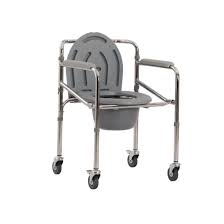 | Commode Chair With Wheel Commode Chair With Wheel A Commode Chair with Wheel is a practical mobility and hygiene solution designed for elderly patients, disabled individuals,... View product → |
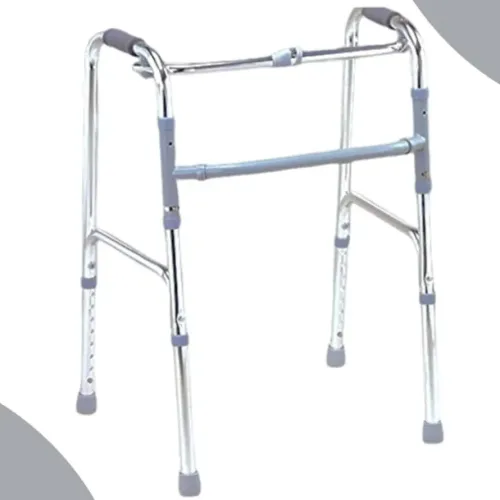
 | walker ₹1900 Walker A Walker is a supportive mobility aid designed to assist individuals who have difficulty walking due to age, injury, surgery, or physical... View product → |