
A professional face steamer is only as useful as its controls, water system, safety features, and cleaning routine. By comparing those details and matching steam exposure to each client’s skin, you can choose a unit that supports a facial treatment without confusing temporary softening with deep cleansing or sterilisation.
Key takeaways
- Choose adjustable steam, automatic shut-off, clear visibility, and easy-to-clean attachments.
- Keep the nozzle away from eyes, broken skin, and heat-sensitive clients.
- Use clean water, empty the tank, and disinfect removable parts between clients.
- Compare steamers with towels, misters, scrubbers, and vaporisers by treatment purpose.
Which functions should a professional multi-functional face steamer include?
Choose a multi functional face steamer for controllable heat, clear visibility, clean attachment handling, and automatic protection—not for the word “multifunctional” alone. Each added feature needs its own operating instructions, cleaning method, warnings, and evidence for its claimed benefit.
| Function | Contribution during a facial | Check before purchase |
|---|---|---|
| Adjustable steam nozzle | Directs vapour toward the treatment area without forcing one distance or angle. | Confirm smooth swivel movement, guarded outlet, and controllable intensity. |
| Hot and cool mist | Supports warming before selected steps and cooling after heat exposure. | Check whether each mode has separate controls and defined output. |
| Magnifying lamp | Improves visibility during skin assessment and precise work. | Look for cool illumination, stable positioning, and easy-to-clean controls. |
| Timer and automatic shutoff | Limits exposure and stops unattended operation. | Confirm timer range, audible alert, and shutoff when the tank empties. |
| Ozone function | Adds a separate ozone-generating feature, not proof of sterilisation. | Request operating warnings, ventilation guidance, and a cleaning procedure. |
| Aromatherapy reservoir | Keeps essential oils away from the main water tank when designed correctly. | Require a separate compartment; never add oil to an unapproved reservoir. |
Also check for a stable base and overheat protection. Condensed droplets can burn skin even when reservoir water is below boiling, while heat can aggravate rosacea-prone skin. A magnifying lamp does not make forceful extraction safe, and steam from the unit does not sterilise instruments. High-frequency or galvanic attachments require separate training and maintenance instructions.
How do you use the steamer through a complete facial?
Run steam after cleansing and before extraction; it prepares the skin rather than replacing cleansing or “opening” pores permanently. Remove makeup and surface oil, then position the nozzle 30–45 cm from the face, aimed across—not directly at—the skin. Start with 5 minutes and stop sooner if the client feels stinging, excessive heat, or tightness.
Follow these facial steaming steps:
- Cleanse first, then steam for 5–10 minutes while checking comfort continuously.
- Turn the steam off before manual extraction. The softened outer stratum corneum can make limited extraction easier, but never force a comedone or extract inflamed acne.
- Apply the treatment mask after extraction. Keep steam off unless the product instructions specifically permit warmth.
- Remove the mask, apply moisturiser or another finishing product, and use cool mist or a cool compress to reduce heat and redness.
Adjust exposure to the client, not the clock. Use 3–5 minutes at a greater steam distance from face for dry or sensitive skin; sensitive skin steaming requires low output and no forced high heat. Avoid facial heat on rosacea-prone skin because it can trigger flushing.
For oily skin, do not extend steaming beyond 10 minutes, and treat acne gently. Reduce heat for darker skin after extraction because irritation can increase the risk of post-inflammatory darkening.
Schedule professional skincare treatments no more than once weekly unless a qualified practitioner recommends otherwise. Stop immediately for dizziness, burning, or persistent redness.
Which specifications affect safety and daily salon workflow?
A safe professional unit balances heat, coverage, and interruption control. Face steamer temperature and steam output rate must be adjustable; a fixed high setting can overwhelm heat-sensitive skin, while condensed droplets at the nozzle can cause burns even below boiling point.
| Specification | Effect on daily salon use | What to check |
|---|---|---|
| Face steamer temperature and steam output rate | Controls comfort, coverage, and treatment consistency | Adjustable settings, guarded nozzle, and controlled spray |
| Reach and swivel movement | Lets you position steam without moving the client or stand | Flexible arm, secure joints, and a nozzle that holds its angle |
| Warm-up time and operating duration | Determines appointment flow and whether the unit keeps pace between clients | Clear ready indicator and a duration suited to a full facial |
| Water tank capacity and refill access | Reduces interruptions, but a large tank adds weight and cleaning work | Removable tank, wide opening, visible level, and easy refill access |
| Stand stability and wheels | Prevents tipping while allowing room-to-room movement | Wide weighted base, lockable wheels, and smooth casters |
| Splash protection | Limits hot-water spray around the client and electrical controls | Sealed switches, drip control, and a nozzle that does not spit |
| Low-water shutoff and overheat protection | Stops dry heating when water runs out or airflow fails | Both protections stated in the manual, not inferred from “professional” |
| Timer shutoff and automatic shutoff | Ends unattended operation and limits overexposure | Adjustable timer plus automatic shutoff after a fault or completed cycle |
Test the swivel, wheels, refill cap, and shutdown functions before a busy day. Keep the nozzle far enough from the face to prevent hot droplets, and reduce heat and exposure for rosacea-prone clients.
How should you compare steam with towels, misters, scrubbers, and vaporisers?
A face steamer vs hot towel comparison starts with control: steam surrounds the face, while a towel delivers heat to a defined area. A facial mister adds moisture without the same heat, and an ultrasonic skin scrubber loosens surface debris through vibration rather than steam.
| Option | Main action | Safer or more suitable use | Main caution |
|---|---|---|---|
| Hot towel | Localised warmth and cleansing | Heat-sensitive clients when the towel is comfortably warm, not hot; useful around the eyes | Reheating can burn skin, and used towels require prompt laundering |
| Facial mister | Fine spray with little or no heat | Rosacea-prone skin, post-extraction cooling, or clients who react to heat | It does not provide steam-softening or replace controlled cleansing |
| Ultrasonic skin scrubber | Vibration-assisted surface exfoliation | Limited exfoliation when avoiding heat; use only on suitable, intact skin | It is not a moisturising device; excess pressure can worsen redness or irritation |
| Salon vaporiser | Larger-volume steam for wider treatment coverage | Multiple treatment rooms or longer professional sessions with ventilation and adjustable output | High output increases heat and burn risk; confirm nozzle distance, timer, and shutoff |
Choose a mister or cool towel for rosacea-prone skin because heat commonly triggers flushing. Stop immediately if stinging, redness, or discomfort develops. Steam droplets can burn at the nozzle, so a steamer needs a guarded adjustable outlet, stable base, timer, and low-water shutoff.
What water and hygiene routine keeps the unit safe between clients?
Use only the water listed in the manufacturer’s manual. Distilled water for face steamer use is often preferred because it leaves little mineral scale; demineralised or filtered water is acceptable only when the manual permits it. Tap water can block the heater and nozzle.
1. Empty the tank immediately after every client. Rinse it with the permitted water, wipe the inside with a clean lint-free cloth, and leave the tank and cap open until completely dry. Warm, stagnant water supports microbial growth.
2. Follow the stated descaling interval for your model, and shorten it if you see white deposits or use hard water. A descaling facial steamer needs the correct product and dilution; never improvise with chemicals that could damage seals or leave residue.
3. Clean and disinfect the nozzle, spray outlet, electrode handles, magnifier controls, switches, and nearby treatment surfaces between clients. Use a disinfectant approved for those materials, observe its stated contact time, and allow surfaces to dry. Rajendra Surgicals can help you request the model’s water specification and cleaning instructions before purchase.
4. Add essential oils only to a manufacturer-approved aromatherapy compartment. Never pour oil, alcohol, herbal water, or disinfectant into the steam tank. These liquids can damage the heater or aerosolise irritants.
5. Treat the ozone function as a separate hazard: follow its ventilation and exposure instructions, keep clients’ eyes closed, and stop use if irritation occurs. Cosmetic steam, with or without ozone, is not instrument sterilisation. Forceps and extractors require a validated sterilisation process using saturated steam, pressure, temperature, and exposure time.
Related product
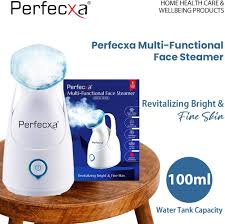 | Multi Functional face Steamer Multi Functional Face Steamer A Multi Functional Face Steamer is a versatile skincare device designed to provide deep facial cleansing, hydration,... View product → |
Frequently asked questions
Which functions should a professional multi-functional face steamer include?
Prioritise adjustable steam output, controllable heat, a visible water level, clear nozzle positioning, clean attachment handling, and automatic shut-off. Treat extras such as magnification or ozone as separate functions requiring their own instructions and safety evidence.
How do you use the steamer through a complete facial?
Inspect and clean the unit, fill it with the specified water, test the steam, and position the client comfortably. Keep the nozzle away from the eyes and sensitive or damaged skin, monitor comfort throughout treatment, then switch off, empty, cool, and clean the unit.
Which specifications affect safety and daily salon workflow?
Check tank capacity, heat-up time, steam-output controls, nozzle adjustment, automatic shut-off, stability, power requirements, cleaning access, and replacement-part availability. These specifications determine treatment consistency, interruption risk, and staff cleaning time.
How should you compare steam with towels, misters, scrubbers, and vaporisers?
Steam provides sustained warm moisture but adds heat, water, and sanitation requirements. Towels offer simple local warmth, misters add lighter surface hydration, scrubbers provide exfoliation rather than heat, and vaporisers must be assessed for their specific output and intended use.
What water and hygiene routine keeps the unit safe between clients?
Follow the manufacturer’s water specification, never leave stagnant water in the tank, and empty and dry it after use. Clean removable parts and disinfect surfaces according to the manufacturer’s instructions, then inspect the nozzle, seals, cord, and tank before the next client.