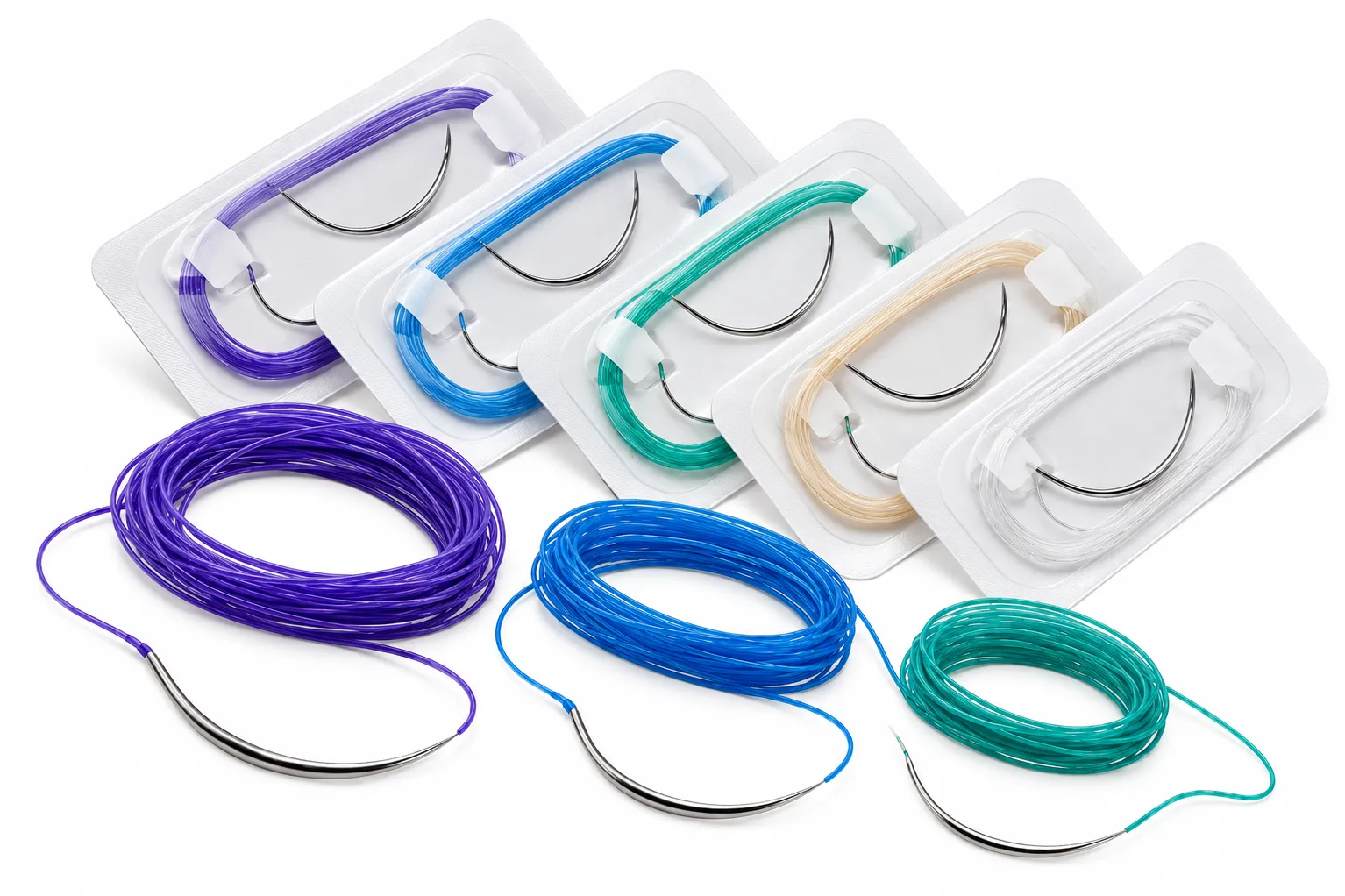
Surgical sutures are essential consumables used across a wide range of medical procedures. Because different tissues, procedures, and clinical situations may require different suture characteristics, procurement teams need to consider material, absorbability, size, needle configuration, sterility, packaging, and intended application. Selecting a suitable Surgical Sutures Supplier is therefore an important part of maintaining organised surgical inventory.
Hospitals, surgical centres, clinics, and nursing homes in Bangalore and across Karnataka often require multiple suture specifications rather than a single universal product.
Understand Absorbable and Non-Absorbable Sutures
One of the fundamental distinctions is whether a suture material is absorbable or non-absorbable.
Absorbable sutures are designed to lose tensile strength and be absorbed over time according to their material characteristics.
Non-absorbable sutures are designed for applications where longer-term tensile support may be required, depending on the procedure and clinical decision.
The appropriate category is determined by the healthcare professional based on factors such as tissue type, healing requirements, and surgical technique.
Material Matters
Sutures are manufactured from different materials, each with particular characteristics. They may also be monofilament or multifilament.
These properties can influence handling, knot characteristics, tissue interaction, and intended application. Procurement staff should therefore source the specification requested by the surgical team rather than substituting products based only on the same nominal size.
Needle Configuration Is Equally Important
The needle attached to a suture is a critical component of the product.
Needles differ in:
- Curvature
- Length
- Point design
- Cross-sectional characteristics
- Intended tissue application
A suture of the correct material but with an unsuitable needle may not meet the surgeon's procedural requirement.
This is why purchase orders should identify products accurately and include the necessary specifications.
Check Packaging and Sterility
Before use, healthcare personnel should inspect suture packaging according to established clinical protocols. Packs with compromised integrity should not be treated as equivalent to intact sterile products.
Procurement teams should also monitor expiry information and rotate inventory appropriately. Stock organisation can help prevent usable products from remaining unnoticed until they approach expiry.
Standardise Frequently Used Specifications
Hospitals performing regular procedures can benefit from identifying frequently used suture combinations by department.
For example, procurement teams can maintain organised records showing:
- Suture material
- Size
- Needle type
- Product reference
- Department
- Typical consumption
- Reorder level
This reduces ambiguity when replenishing stock.
Rajendra Surgicals supplies surgical instruments, medical consumables, and healthcare products for facilities in Bengaluru. Hospitals and clinics enquiring about sutures can provide exact required specifications so that availability can be assessed accurately.
Avoid Price-Only Procurement
Suture purchasing should not be reduced to comparing the cost of individual packs. Buyers need to evaluate whether the quoted product actually matches the requested clinical specification.
A seemingly inexpensive substitute can create operational inconvenience if the material, needle, length, or other characteristics differ from what the surgical team requires.
For institutional buyers in Karnataka, procurement efficiency often comes from accurate specification management, sensible inventory levels, and dependable replenishment rather than simply selecting the lowest unit price.
A reliable Surgical Sutures Supplier should be able to support clear product identification and consistent supply requirements. When hospitals, clinics, and surgical facilities in Bangalore organise sutures by clinical specification, consumption, and reorder requirements, they can create a more structured inventory system that supports day-to-day procedural readiness.
Keywords