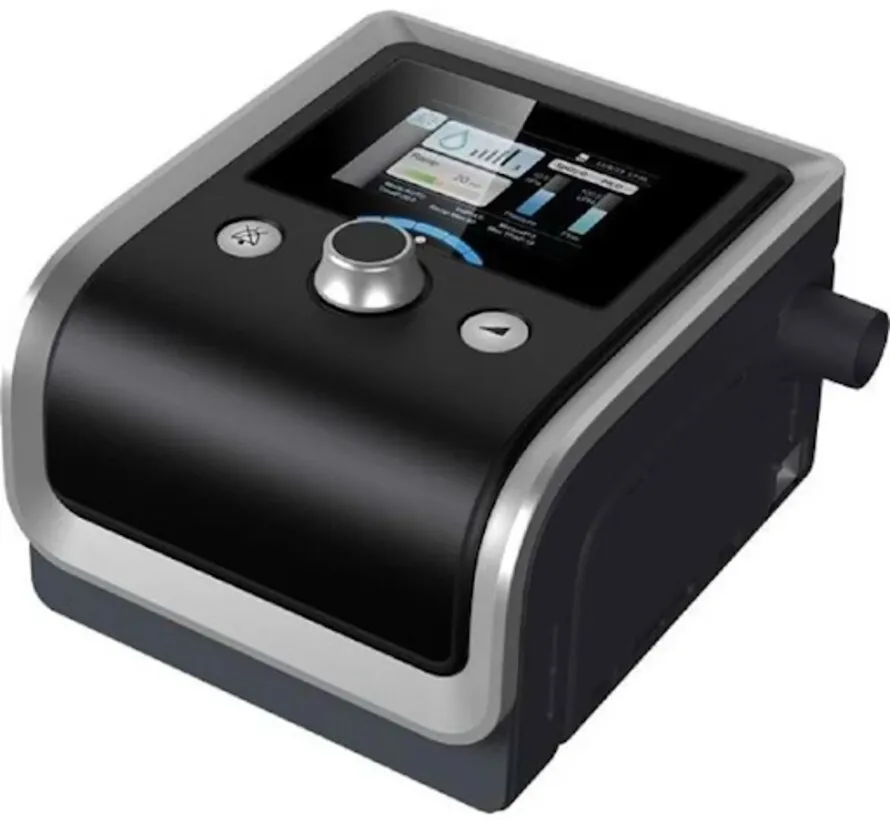
Choosing a bilevel machine starts with the breathing problem and the clinician’s prescription, not with the highest pressure number or the longest feature list. By the end, you will be able to match IPAP, EPAP, mode, backup rate, mask, oxygen setup, monitoring, and power requirements to a machine that is appropriate for home use.
Key takeaways
- Confirm a clinician has prescribed BiPAP for your breathing condition.
- Match IPAP, EPAP, backup rate, and mode to the prescription.
- Check mask fit, oxygen compatibility, humidification, and monitoring features.
- Prepare backup power, cleaning routines, filters, and emergency instructions.
First establish whether BiPAP is the right therapy
BiPAP is appropriate when you need separate inspiratory and expiratory pressures to support breathing, not simply because a machine feels more advanced. A clinician must assess your diagnosis, carbon-dioxide level, symptoms, sleep study, and ability to breathe independently before prescribing it.
| Condition | Usual starting approach | When BiPAP or hospital care enters the decision |
|---|---|---|
| Uncomplicated obstructive sleep apnoea | CPAP or auto-adjusting PAP | Bilevel therapy if high CPAP pressure is required or CPAP is not tolerated |
| Central sleep apnoea | Clinician-selected PAP therapy | A specified mode, sometimes S/T, when breathing effort repeatedly stops |
| COPD-related hypercapnia | Assessment after stabilisation and sleep-apnoea screening | Selected patients with persistent high carbon dioxide may need nocturnal NIV |
| Obesity hypoventilation syndrome (OHS) | PAP chosen after evaluating sleep apnoea and daytime ventilation | BiPAP when ventilation support is needed beyond airway splinting |
| Acute respiratory failure | Hospital-based non-invasive ventilation and monitoring | Do not substitute a home PAP device for emergency respiratory support |
CPAP mainly holds the upper airway open with one pressure. BiPAP uses higher inspiratory positive airway pressure (IPAP) and lower expiratory positive airway pressure (EPAP); their difference, pressure support, assists inhalation. Spontaneous mode depends on your breaths, while spontaneous/timed (S/T) mode adds a backup respiratory rate if your effort falls below the set rate.
Buy only against a prescription specifying IPAP, EPAP, backup rate, inspiratory time, and oxygen flow.
Use the prescription to understand pressure and mode
Read the prescription as a set of targets, not as a reason to choose the highest pressure range. IPAP is inspiratory positive airway pressure; EPAP is expiratory positive airway pressure. Pressure support equals IPAP minus EPAP: with IPAP 14 and EPAP 6, support is 8 cmH2O.
| Prescription item | Meaning | Comparison question |
|---|---|---|
| IPAP | Pressure delivered during inhalation; supports ventilation and reduces breathing effort | Can the machine deliver the prescribed IPAP? |
| EPAP | Pressure maintained during exhalation; helps keep the upper airway open | Can it deliver the prescribed EPAP independently? |
| Pressure support | The difference between IPAP and EPAP | Does the device preserve the prescribed difference? |
| Backup respiratory rate | Minimum breaths per minute the device helps provide when spontaneous breathing falls below the set rate | Does it offer a clinician-set backup rate? |
| S/T mode | Spontaneous/timed operation: follows your breathing, then provides timed breaths when effort drops | Is S/T mode required by the prescription? |
In spontaneous mode, the machine responds to breaths you initiate. S/T mode adds timed support when your breathing becomes too slow or pauses, which matters in conditions such as central sleep apnoea, neuromuscular weakness, opioid-related hypoventilation, or sleep-related hypoventilation.
Ask the prescriber to specify IPAP, EPAP, backup respiratory rate, inspiratory time, mode, and oxygen flow. Do not change these settings yourself. A machine with suitable maximum pressure but no S/T mode or backup rate cannot fulfil that prescription.
Match the machine’s capabilities to the prescribed settings
Choose a device that can deliver the prescribed IPAP, EPAP, pressure support, and backup rate in the prescribed mode; a wide maximum pressure is not a substitute. Confirm that the machine’s minimum and maximum IPAP and EPAP settings include every prescribed value, because EPAP keeps the airway open while pressure support assists inhalation.
| Mode | What it does | When it applies |
|---|---|---|
| Spontaneous mode | The patient triggers every breath; the machine supplies the set IPAP and EPAP. | Patients who maintain reliable spontaneous breathing |
| Spontaneous/timed (S/T) mode | Adds a backup respiratory rate when spontaneous effort falls below the set rate. | Prescriptions involving central apnoea, hypoventilation, or weak breathing effort |
| Fixed-pressure bilevel | Delivers set IPAP and EPAP values throughout treatment. | A supervised titration has established stable pressures |
| Auto-adjusting bilevel device | Adjusts pressure within clinician-defined limits in response to breathing events or flow changes. | Only when the prescription specifically permits automatic adjustment |
Check these capabilities against the written prescription:
- A backup rate, inspiratory time, or S/T mode, if listed; ordinary spontaneous mode cannot provide timed breaths.
- Leak compensation, ramp control, and an integrated humidifier if comfort or mask leakage requires them.
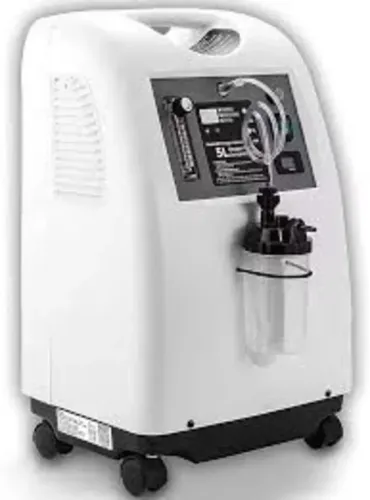
- Oxygen bleed-in compatibility at the prescribed flow, with a connector designed for that circuit.
- Downloadable or remote compliance data, plus alarms suited to the patient’s risk.
- Any ventilatory monitoring or life-support function required; a PAP-labelled device is not automatically suitable for ventilator dependence.
Do not increase IPAP, EPAP, or automatic limits without the prescribing clinician. A higher pressure range can worsen leaks, aerophagia, dryness, or failed exhalation rather than improve treatment.
Check the interface, oxygen, comfort, and monitoring features
Choose the interface that seals without forcing you to overtighten the headgear. A nasal mask suits adequate nasal breathing, while nasal pillows use the least facial contact. Choose a full-face mask when you cannot reliably breathe through your nose; it can feel less comfortable and leak more.
Persistent mouth leak calls for treating nasal blockage, a chin strap, or another interface—not simply higher pressure.
| Feature | Compare | Why it matters |
|---|---|---|
| Mask fit | Nasal mask, nasal pillows, or full-face mask | Check seal, sleeping position, cushion size, and eye leaks; large leaks reduce delivered pressure and distort event data. |
| Humidification | Integrated heated humidifier, heated tube, or neither | Humidification eases nasal and throat dryness; condensation requires lower humidity, a heated tube, or warmer tubing. |
| Oxygen bleed-in | Specified oxygen flow and approved connection point | Oxygen raises saturation but does not correct poor ventilation; use it only with a clinician’s prescription and monitoring plan. |
| Leak control | Leak display, compensation, and suitable alarms | Large leaks dry the mouth and eyes and can prevent accurate triggering. |
| Recording | Usage hours, leak, residual events, pressure, and oximetry compatibility | Downloadable data helps clinicians separate poor adherence from ineffective treatment. |
| Remote monitoring | Cellular or Wi-Fi transmission, consent, and review process | Confirm who receives alerts and whether connectivity works where you sleep. |
Ask how to manage aerophagia, skin injury, rainout, and exhalation discomfort before choosing a device. Remote data cannot replace clinical review, and a PAP-labelled machine may lack alarms or monitoring needed for ventilator-dependent care.
Plan for power, maintenance, and safe home use
A home setup is ready only after you can run it safely during a power cut, clean it correctly, and respond to an alarm without guessing. Complete these checks before taking the device home:
1. Match the machine’s electrical rating with your outlet. Confirm the required voltage, wattage, plug type, and whether a voltage stabiliser is needed.
2. Confirm battery compatibility and backup duration with the manufacturer. If you plan to use an inverter, verify inverter compatibility, including the required output waveform and power capacity. Do not connect an unapproved battery or inverter.
3. Test every alarm with the supplier or respiratory therapist. Learn what low pressure, high leak, power failure, disconnection, and low-battery alarms sound like, and know which response requires immediate clinical help.
4. Get the cleaning and replacement schedule in writing. It should cover the mask cushion, tubing, filters, water chamber, and any bacterial filter. Ask whether tap water is permitted; use the specified water type for the humidifier.
5. Check the noise rating in decibels and listen to the running unit with the mask attached. A loud machine or whistling leak can disturb sleep and hide an alarm.
6. Read the warranty terms before paying. Confirm coverage for the motor, humidifier, battery, accessories, repairs, transport, and service location.
When collecting a prescribed device from Rajendra Surgicals, take the prescription and ask staff to demonstrate assembly, mask fitting, humidifier filling, data download, and safe shutdown. Keep your clinician’s escalation number beside the machine; home BiPAP is not an emergency ventilator or hospital monitoring system.
Related products
 | Hospital Equipment BIPAP Machine (Bi-Level Positive Airway Pressure) A BiPAP (Bi-Level Positive Airway Pressure) machine is an advanced respiratory support device designed to... |
 | Hospital Equipment CPAP Machine (Continuous Positive Airway Pressure) A CPAP (Continuous Positive Airway Pressure) machine is a reliable respiratory therapy device designed... |
Frequently asked questions
How do I know whether BiPAP is the right therapy?
A clinician assesses your diagnosis, carbon-dioxide level, symptoms, sleep study, and ability to breathe independently before prescribing BiPAP.
Which prescription details must match the BiPAP machine?
Check the prescribed mode, inspiratory positive airway pressure (IPAP), expiratory positive airway pressure (EPAP), backup rate, inspiratory time, oxygen flow, and ramp settings.
What interface and comfort features should I compare?
Compare nasal and full-face masks, seal quality, headgear adjustment, humidification, heated tubing, leak alerts, and data reporting.
What is required for safe BiPAP use at home?
Plan for power interruptions, clean the mask and tubing as directed, replace filters and consumables, keep the prescription available, and follow the clinician’s emergency instructions.