A scale that displays weight to one decimal place is not automatically accurate. You need to assess its measurement specifications, use it under repeatable conditions, and choose a platform and display that suit the person using it. By the end, you will know which features matter, how to test consistency, and when digital readings should not be treated as clinical measurements.
Key takeaways
- Check measurement increments, maximum capacity, units and platform dimensions before buying.
- Weigh at the same time, on the same hard floor, using the same routine.
- Choose a non-slip platform and keep children and users with balance issues safe.
- Use connected scales for trend tracking, not as a substitute for clinical measurement.
Read the specifications behind the displayed number
The displayed number is only as useful as the scale’s accuracy and repeatability. Load-cell resolution describes how finely the sensor detects force; measurement increment describes the smallest change shown on screen.
A scale may offer 0.05 kg or 0.1 lb resolution despite accuracy limits, so ask for a stated accuracy or tolerance rather than trusting extra decimal places.
| Feature | What it tells you | Why it matters |
|---|---|---|
| Load-cell resolution | How finely force is detected | Supports smaller detectable changes, but does not prove accuracy |
| Measurement increment | The displayed step, such as 100 g | A 100 g display change is not necessarily a 100 g body-weight change |
| Maximum capacity | The heaviest permitted load | Choose capacity above the user’s expected maximum; overload can damage the load cell |
| Zero or tare function | Whether the scale starts from zero | A non-zero starting display can shift every reading |
| Low-battery and overload warnings | Whether power or load is outside safe limits | They help you reject readings taken under faulty conditions |
Use the scale on a hard, level floor and keep its position consistent; carpet or one uneven foot can create false changes. Stand still with dry bare feet. Body-fat and BMI figures are estimates, not replacements for the weight reading: BMI uses height and weight, while BIA results change with hydration, meals and exercise.
Track those figures as trends under the same conditions.
Use the same weighing routine every time
Take readings as a routine, not as isolated events. Use the same scale in the same position, because comparing different scales can turn calibration differences into an apparent health change. Daily weight also shifts with food, fluids, sodium, exercise and hormonal changes, so follow the trend across several days rather than reacting to one result.
- Place the scale on a hard level floor, never on carpet or an uneven surface.
- Weigh after using the bathroom and before eating or exercising.
- Choose the same time of day and clothing conditions for each reading.
- Step on with dry bare feet, centre your weight on the platform and stand still.
- Keep the scale in one position; moving it between surfaces can change the displayed value.
- Wait for the display to settle, then record the result with the date.
Check repeatability during setup or once a month. Step off, wait for the display to return to zero, then take two or three readings under the same conditions. A repeatable scale should return to the same value, or show only a small, consistent difference.
If readings jump, check the floor, battery and your stance before trusting the trend. Do not average unexplained variation. A stable reading from the same scale is more useful for everyday monitoring than a precise-looking number from changing conditions.
Check units, platform fit and user safety
Choose a scale whose display, platform and capacity suit the person using it. Confirm that the kg/lb unit selection is simple to change and that the screen shows kilograms or pounds clearly, without forcing you to convert the result.
Check these physical and display details before buying:
- Look for large, high-contrast digits that remain readable while you stand upright. A backlit display helps in a dim bathroom.
- Compare the platform dimensions with the user’s foot length and stance. Both feet should fit fully without touching the edge.
- Choose a low-profile platform to reduce step-up height, but reject a surface that is thin, unstable or slippery.
- Verify the maximum user weight and choose capacity above the person’s expected maximum load.
- Never weigh while holding a child, luggage or another object unless the manufacturer specifically permits it. Overloading can damage the load cell and produce a false reading.
- Look for stable, non-slip feet and use the scale on a hard, level floor, never carpet or an uneven surface.
- Prefer clear low-battery and overload warnings, so you do not mistake a weak or invalid reading for a health change.
If the user has poor balance or cannot stand unassisted, choose a clinician-approved seated, chair or wheelchair scale instead. A conventional bathroom scale is not a safe substitute.
Compare digital, analogue and connected features carefully
Choose a digital scale when you need clear numbers, repeatable readings, or small changes such as 100 g or 0.1 lb. Its display readability also helps users who struggle with a pointer, although fine resolution does not prove accuracy; check the stated tolerance.
An analogue spring scale remains useful when battery dependence is unacceptable and a rough reading is enough.
| Feature | Digital scale | Analogue spring scale |
|---|---|---|
| Reading method | Load cell and numeric display reduce parallax errors | Spring and pointer require viewing the dial straight on |
| Maintenance risks | Battery failure, calibration drift, and damage after drops; check low-battery and overload warnings | No battery, but spring wear, pointer misalignment, and calibration drift can affect readings |
| Practical strength | Select a model with stated shock resistance and a stable platform | Simple construction can suit occasional use, but a hard impact can bend the mechanism |
| Record keeping | Connected models can save dates and trends | Requires manual recording |
Bluetooth or Wi-Fi improves record-keeping, not clinical accuracy. Trust app data only after checking that the date, time, user identity, and manual corrections are correct; the scale should retain readings when the phone or network is unavailable.
Treat BIA body-fat and water percentages as rough estimates, compare them only under consistent conditions, and follow trends rather than one result. BMI is calculated from height and weight, so it is a screening measure—not a diagnosis—and does not separate fat, muscle, bone, or body water.
Choose the scale for its intended level of measurement
Verify the measurement increment, stated accuracy, maximum capacity, and intended setting before buying. A tare or zero function matters when you place a container or support on the platform. A low-battery warning and overload warning help prevent trusting a distorted reading or damaging the load cell. Choose a capacity above the person’s expected maximum load.
- Ask whether Bluetooth and Wi-Fi record-keeping includes the date and time, manual correction of misidentified users, and storage when the phone or network is unavailable. Connection improves records, not clinical accuracy.
- Ask whether the scale requires a hard, level floor and whether its platform suits the user’s stance.
- At Rajendra Surgicals, ask staff to distinguish a home monitor from a scale designed for patient transfer or supervised weighing.
| Option | Verify | When it applies |
|---|---|---|
| Consumer bathroom scale | Stable standing, clear display, stated capacity and increment | Independent home monitoring on a hard floor |
| Assisted or clinical scale | Handrails, chair, wheelchair or bed compatibility; a suitable safety and accuracy specification | The person cannot stand unaided, needs support, or is weighed with mobility equipment |
| Clinical or legal-for-trade instrument | Verification against applicable metrology requirements, including OIML R 76 for non-automatic weighing instruments | Clinical decisions, billing, research or regulated transactions |
A consumer bathroom scale is unsuitable when the user must hold a caregiver, support bar, child or equipment, because the load path and balance become unreliable. Choose a purpose-built chair, wheelchair, bed or medical scale instead.
Related product
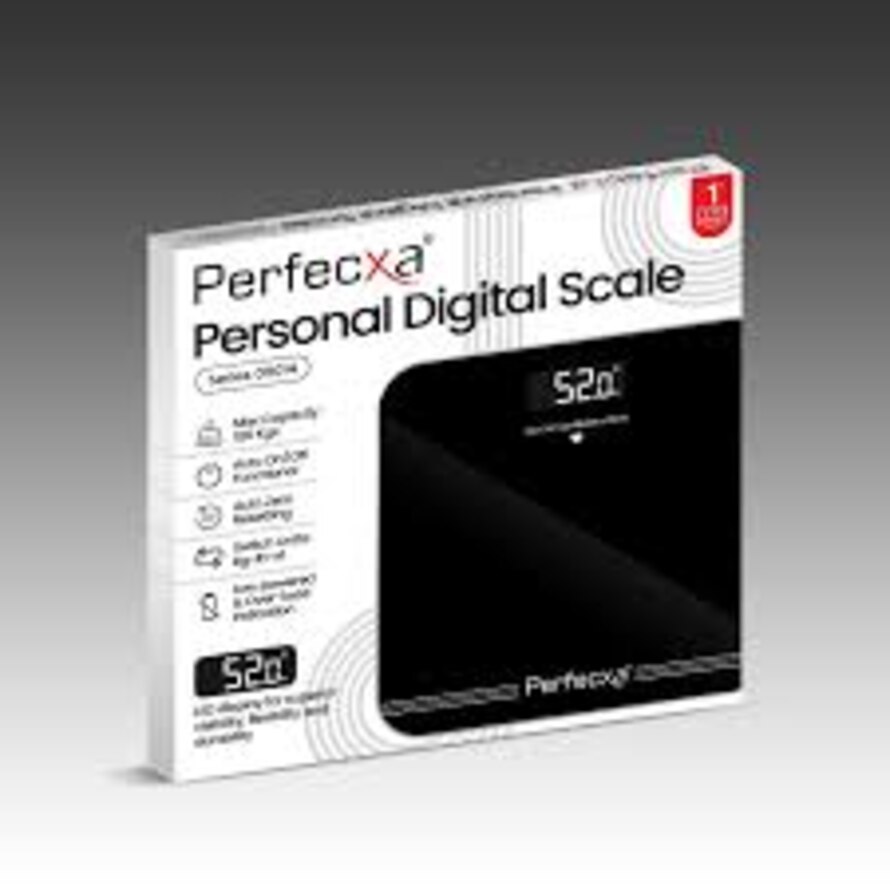
 | digital scale Digital Weighing Scale A Digital Weighing Scale is a modern and accurate device designed to measure body weight quickly and precisely. View product → |
Frequently asked questions
What specifications affect a digital weighing scale’s displayed accuracy?
Check the measurement increment, maximum capacity, load-cell details, calibration information and operating conditions. A smaller displayed increment does not automatically prove greater accuracy.
How can you make everyday weight readings more consistent?
Place the scale on a hard, level floor and weigh at the same time under similar conditions. Step on in the same position and avoid moving the scale between readings.
What should you check for platform fit and user safety?
Confirm that the platform accommodates both feet, the scale supports the user’s weight, the display is readable and the surface has secure footing. Keep the scale dry and remove it from walkways.
When should you choose a connected or clinical-grade scale?
Choose a connected scale when recording trends or sharing readings matters. Use a clinical-grade device when a healthcare professional requires a specified measurement level; do not treat consumer readings as a diagnosis.