


Healthcare procurement involves hundreds of decisions that may appear routine until a missing accessory, incorrect specification, incompatible consumable, or delayed replenishment disrupts normal operations. Choosing a Healthcare Products Supplier requires a broader assessment than simply checking whether a vendor can provide a particular item today.
Hospitals, clinics, diagnostic centres, nursing homes, and healthcare businesses across Bangalore and Karnataka can improve procurement efficiency by recognising several common mistakes before they become recurring problems.
1: Buying Without a Precise Specification
Medical products often have multiple sizes, configurations, models, and compatible accessories.
A request such as 'send BP cuffs' or 'need surgical consumables' may not contain enough information to identify the correct product.
Whenever possible, purchase requests should include relevant details such as product type, size, model compatibility, quantity, and intended application.
2: Comparing Only the Lowest Quotation
Cost control matters, but unit price alone does not represent total procurement value.
A lower quotation can become less attractive if the product does not match specifications, compatible consumables are difficult to obtain, or frequent small purchases create additional administrative effort.
Evaluate price together with:
- Product suitability
- Availability
- Documentation
- Packaging
- Replacement consumables
- Delivery requirements
- Supplier responsiveness
3: Ignoring Compatibility
Compatibility becomes especially important when buying accessories for existing medical equipment.
Masks, tubing, cuffs, filters, connectors, and other components may not be universally interchangeable. Purchasing an accessory simply because it looks similar can result in unusable inventory.
Record the equipment model and compatible product reference whenever possible.
4: Failing to Track Consumption
Without consumption data, facilities tend to overstock some products and repeatedly run short of others.
Even a simple monthly review can reveal which supplies move quickly, which are seasonal, and which remain unused.
For healthcare organisations in Bengaluru with multiple departments, consumption tracking can also show whether stock needs to be distributed differently between locations or units.
5: Treating Every Product as a One-Time Purchase
Many healthcare products create recurring requirements.
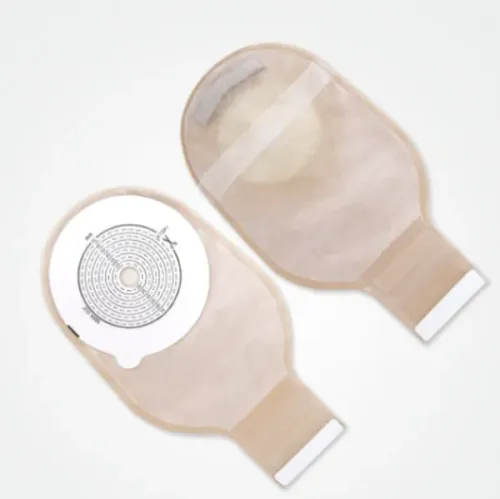
A CPAP machine, for example, may require replacement filters, masks, or tubing. Ostomy care involves recurring pouching supplies. Patient monitoring equipment may require compatible cuffs or other accessories.
Procurement should consider this lifecycle at the initial purchasing stage.
Rajendra Surgicals supplies medical equipment, surgical instruments, healthcare consumables, and related products for healthcare customers in Bangalore. Providing detailed requirement lists can make product identification and quotation discussions more efficient.
6: Waiting Until Stock Is Nearly Finished
Last-minute ordering limits purchasing flexibility.
A better approach is to define reorder levels based on typical consumption and expected procurement lead time. Critical fast-moving items may require additional buffer stock according to the facility's internal policy.
7: Using Too Many Vendors Without a Clear Reason
Multiple vendors can be useful, particularly when products are specialised. However, excessive fragmentation may increase purchase orders, follow-ups, invoices, and reconciliation work.
Healthcare facilities can periodically review which suppliers reliably cover recurring categories and where specialised sourcing is genuinely necessary.
Building a Better Procurement Process
An effective healthcare procurement system does not need to be complicated. Start by maintaining a product master list containing specifications, preferred pack sizes, consumption, reorder levels, and compatible equipment information.
Then review supplier performance periodically based on measurable factors such as fulfilment accuracy, product availability, documentation, and responsiveness.
Choosing a Healthcare Products Supplier becomes considerably easier when procurement decisions are based on accurate data rather than repeated emergency purchases. For healthcare organisations across Bangalore and Karnataka, avoiding these common mistakes can help create a more organised, predictable, and practical medical supply process.